

As business owners, we sell. Our marketing efforts and goals come back to that.
There are other element to our success and our goals of course, but a business makes money. We have to sell either product or service or program, or even ourselves as personal brands, especially if you’re a speaker or getting on stage. But there is an exchange of something for money.
And yet, I am frequently asked when working with clients or chatting with fellow business owners about selling and the friction they feel, and the conflict they have about creating too much ‘sales’ content.
Full disclosure, I understand this issue because I struggle with it myself at times.
You want to and you need to sell, but you also need to do it in a way where you don’t feel as though people tire of you or what you sell.
I’m going to be honest about content and selling
People need to see and be reminded of your offers over and over and over again.
To the point where we almost feel sick of ourselves saying it.
And, for service providers, we are usually selling the same thing over and over again (your signature offer, your course, your service, your package).
You get to that point where you’re thinking, “I can’t do this again,” when you are launching or marketing but that’s really when you actually have to keep going. You’re still in that process where they’re still learning about it.
We may have to work on different messaging, but if your offer is validated and something people need, we have to tell them about it.
The worst thing I still find that happens is when people tell me, ‘Oh, I didn’t know you did that.’
And that’s in part because there are some services I don’t promote. I have offers that get unlocked if you are an existing client because I need to do the strategy first or work with you deeper before getting to the next level of some things. It’s just the way that I work.
But for my main offers? I need to be talking about them way more.
Talk about your offers and products more
You may be feeling that as well. Have you ever heard:
“oh, I didn’t know you sold that product in your shop.”
“Oh, I didn’t know that that was a service you offered in your business.”
“I didn’t know that you had a membership for that group that’s at a lower price than your one-on-one coaching,” or
“I didn’t know that was an offer.”
Those are the things that we don’t want happening, so we do need to talk about it. And we need to make it easy for people to say yes.
That means on the website it’s clear, on our bios it’s clear, the link isn’t broken, the link doesn’t go to an old offer.
Can someone understand how your offer is right for them or that you sell what they need quickly? And can they buy from you easily?
Are you losing sales because it’s difficult to pay you?
Yes, we need to talk about more, and yes, we want to make it easy, so don’t hide it, don’t make it where you have to click 15 times to get to the sales button, the checkout.
Make it easy to buy from you. Your content can help.
How does content help you make sales? I know you’ve heard this before, people talk about it a lot, but if you reframe the thought of selling to serving, it feels a lot better. It might align better with you.
You are helping. You are providing a need or a want and people are going to choose it from somewhere, so why not you?
And maybe you actually think “no, I love to sell, that’s what I do. I make money, it’s fine.” That’s great too.
But if you’re struggling, thinking about it in service is an easier way.
I think one of the things to know is that you need to figure out your sales style.
What is the way you like to sell? For example, my way is probably going to be different than your way, and that’s okay.
Some people show up on stories, they talk about it a lot, they’re talking about the product or service, the benefit, the transformation, all those things.
And it’s them in front of the camera, and they’re sharing it, and they’re screenshotting it, and they’re screenshotting testimonials and DMs, and they’re very out there, so the visibility of their offer is very clear.
Other styles may be a bit more quiet, or subdued, and maybe you don’t feel like you can show up, or that’s just not authentically how you are, and I understand that. Maybe you feel more comfortable in person than on a video call. Maybe you love to chat and answer questions via voicenote. Find your way.
You still need to be visible.
I show up and I share, and then invite and offer to learn more, or I do a lot of discovery calls, so one on one conversations, or DMs or coffee chats, and the connection, that personal connection for me, is how I sell.
Because I’ve gotten better over the years at knowing, I need to learn what this person needs first before I offer the exact thing. Even though I have packages, how I can help is customized.
If you have a program where you have the same membership for everyone, at the same cost, there’s no customization, you can still personalize it in some ways.
But you need to figure out your best method of selling. AND you have to talk about it.
How to get visibility to make more sales
When I’m recording a podcast, or whenever I’m in person with someone and chatting about what I do, or if I’m talking about something with my content, or I’m a podcast guest – I may not say you can hire me to do this, but the way that I’m subtly selling is when I work with clients, and for those who hire me, this is where I start first. And so it reminds people that I am for hire without saying you can work with me.
Sometimes, we just need to make the ask.
And whether that looks like full on just saying,
- here’s how you can work with me,
- here’s how we can work together,
- here’s the link to my offer,
Whatever the case is, we do at some point, if we’re going to close the sale, we need to make the ask. But what I really like doing, and I find this works well for me, is I will often invite people for that link.
So, unless they’re finding it, I’ll share it in stories, or I’ll share it in my newsletter, or I’ll share it on the website, but I often invite people to reply to my newsletter, or DM me, or book that discovery call to chat more about what their needs are first, because I like to, one, hear all about that, but it’s an invitation.
It puts control back for them.
It gives the potential client the feeling of not being pressured. And we know pressure tactics work, but in this case, it doesn’t work for me.
This goes back to figuring out the style that you sell in your content. Maybe it’s all that educational content or informational content that you’re giving. Just make sure you are making a call-to-action or an ask.
What you do need to do is position yourself as to why you’re the person to work with to learn more about it.
We know that information and education, it’s so bountiful everywhere online. We can Google it. People can AI search it. People can find it in TikTok and Instagram reels. So there’s a lot of free information out there.
So, what is it about your perspective, your framework, your offer, your customer service, whatever it is that makes you unique to your business, you unique to your offer.
That’s where you start to embed that in your content. Your unique voice.
Your point of view, your perspective, your authority is going to help you stand out.
It’s going to stand out from competitors.
It’s going to stand out from just being able to use AI for something.
That’s where it’s going to make a difference.
So when you’re thinking about selling in your content, think about it more than just ‘Here’s the offer,” Think about it more as, “here’s why I’m the expert to help guide you through this issue,” or “to help solve this problem,” or “the shop that is going to help provide you with the right product, and feel good about it.”
Whatever the case is, we create a lot of free content. So one of the hesitations with selling is, “oh, I want people to have this information,” and I speak again from experience.
Of course I want people to know this. I want to change the landscape of content.
I want people to stop stressing about it and be able to find what works for them in their capacity.
I want that.
I share free content so some of my information is always available even to non-paying clients, and I sell my offers. My content positions me as the go-to person.
When someone says to themselves “I think I’m ready to buy. I think I’m ready to work with you.” They know already me, they know my process, they know the kind of information I can help them with.
And so, we eliminate some of that in-between where people are confused or unsure about what working with us will be like.
Ultimately, that content helps us sell, if we’re doing the content right.
So, this is why we can’t just template our content and send it out, or hope for the next viral reel. Intentional content is going to help serve us ultimately, to sell the service or product that we’re doing.
What take aways do you need to remember about your content and sales?
Of course we have to sell, of course we have to make the ask, but there are ways that we can do it that works for us, that we can find our style. We need to practice it sometimes, and that’s OK.
Think about what that looks like for you, and make it easy at the end of the day for someone to say, “yes, I’m ready to work with you.”
What does that look like? You probably focus on your marketing process and systems, but what about your sales process?
Make it easy for them when they’re ready to buy.
And to make it easy, share that link, share that information, remind people you’re for hire.
Remind people you have certain products. Remind people of your programs. You need to talk about it.
So the more you do that, the easier it will become. But give yourself permission to sell what you are creating, that is OK, but I also understand that you’re going to want to sell it in a way that feels authentic and genuine for you, and that’s great too.

Table of content
Related articles

September 30, 2026

September 30, 2026
September 30, 2026

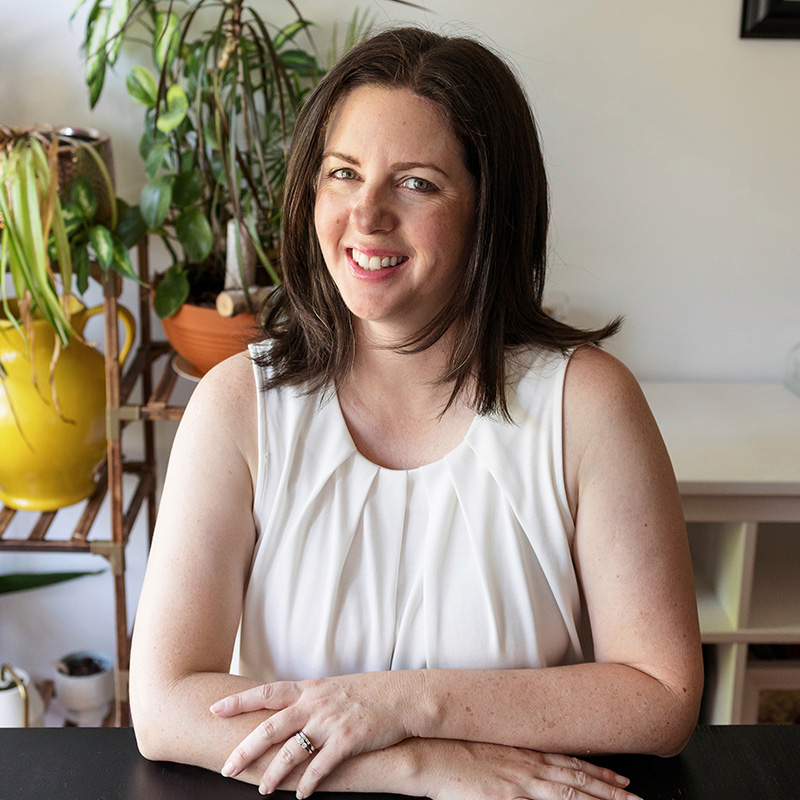
Hi, I'm Rebecca!
I’ve spent over 16 years helping solopreneurs and small business owners stress less about content. My approach isn’t about creating more, it’s about creating with intention, in a way that fits your goals and your capacity.
If your content plan has been sitting on your “someday” list, now’s the time to make it happen. I’ll work with you to create a strategy that feels clear, sustainable, and doable.
